


Postdoc selected for inaugural CRI IGNITE Award to support cancer research

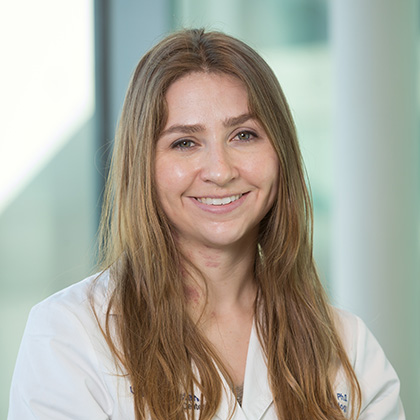
With a lifelong love for science – as a child, she couldn’t get enough of nature documentaries – Shayna Thomas-Jardin, Ph.D., gravitated toward the premed track as an undergraduate, until volunteering in a lab ignited her passion for research.
“Once I knew I wanted to pursue a career in research, I knew I wanted to study cancer,” she said. “Cancer is such a complex disease, really a collection of 30 or so different diseases. Studying how their interactions with the immune system work and what mechanisms are at play behind the scenes is very exciting to me. That’s what drew me in.”
What keeps her locked in is the endless potential.
“There’s this element of serendipity to research that’s really beautiful,” she said. “I love that every day I come to work there’s the possibility of the unknown. I plan my experiments out in advance, so I know what I’ll be doing, but I don’t know what the result will be. What unexpected result might lead me down a new path I hadn’t thought of?”
A postdoctoral researcher in the O’Donnell Lab, Dr. Thomas-Jardin explores how stressed cancer cells selectively produce proteins that help them survive and evade immune attack. Her ultimate goal is improving immunotherapy responses to uncover new therapeutic targets for lung, breast, and prostate cancers.
For this vital work, she is among eight recipients of the inaugural Cancer Research Institute (CRI) IGNITE – Inspiring Growth and Nurturing Independence Through Excellence – Award. Designed to support early-career scientists pursuing high-impact research in cancer immunology and immunotherapy, the transitional grant includes up to two years of mentored postdoctoral funding ($150,000 annually), followed by up to three years of independent faculty support ($250,000 annually).
Her research focuses on the unique survival skills of cancer cells within the tumor microenvironment. The inside of a tumor, she explained, is an incredibly stressful place where oxygen and nutrients are scarce, and dying cells release molecules that signal other cells to self-destruct. Despite these harsh conditions, cancer cells continue to grow, overcome these stresses, and hide from the immune system.
The O’Donnell Lab, led by Kathryn O’Donnell, Ph.D., Associate Professor of Molecular Biology, discovered that these stresses activate a specific pathway in tumor cells called the integrated stress response, which allows them to express proteins to hide from the immune system.
“This pathway controls cell fate through distinct translational and transcriptional mechanisms that are lost in traditional, large transcriptional cancer data analyses,” Dr. Thomas-Jardin said. “My work will reveal the breadth and depth of proteins that are uniquely controlled by this pathway in cancer cells, hopefully yielding new therapeutic targets and improving immunotherapy outcomes.”
Previously, Dr. Thomas-Jardin received a National Institutes of Health (NIH)/NCI Ruth L. Kirschstein National Research Service Award (NRSA) Individual Postdoctoral Fellowship (F32) that funded her work in the O’Donnell Lab from 2023 to 2026.
“The CRI IGNITE Award is a prestigious transitional grant, and Shayna is highly deserving of this honor,” said Dr. O’Donnell, who is also a member of the Harold C. Simmons Comprehensive Cancer Center and co-leader of its Development and Cancer Program. “Receiving an NIH/NCI F32 NRSA Postdoctoral Fellowship Award and now the CRI IGNITE Award reflects the high quality of Shayna’s science and the confidence that independent review panels have in her work.”
Before joining UTSW in 2021, Dr. Thomas-Jardin earned a bachelor’s degree in biology and a Ph.D. in molecular biology at UT Dallas. Ultimately, her goal is to establish her own research lab dedicated to studying immune and cancer cell interactions within the tumor microenvironment.