


Geriatric specialist Rubin appointed Professor Emeritus of Internal Medicine

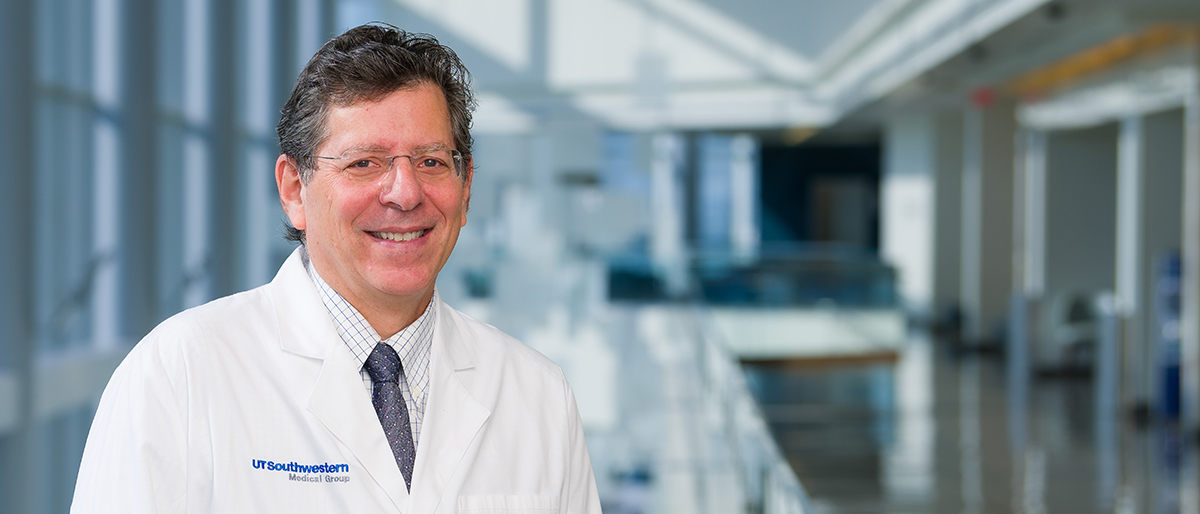
When he became a physician specializing in geriatrics, Craig D. Rubin, M.D., expected there would be challenges.
“Older adults are a particularly heterogenous group of patients physiologically, functionally, and socially. Often, they are medically complex. Frequently, many of their concerns go unaddressed in the typical biomedical model of care,” he said. “I found the challenges, rewards, and professional satisfaction were great. I feel so fortunate to have had the opportunity to provide care to my patients.”
He added that he is blessed to have had a role in teaching and research at UT Southwestern, and to have worked with so many fabulous faculty, trainees, and staff members.
In honor of a 40-year career characterized by exceptional contributions to clinical geriatric care, education, research, and program development, Dr. Rubin has been appointed Professor Emeritus of Internal Medicine. In 1989, Dr. Rubin established a Section of Geriatric Medicine in the Division of General Internal Medicine. Much of his success occurred during his service as inaugural Chief of the Division of Geriatric Medicine, which began in 2013 and continued until his retirement earlier this year.
Dr. Rubin championed innovative programs that improved care for older adults, including:
- The Care of the Vulnerable Elderly (COVE) house call program
- The Acute Care for Elders (ACE) Unit, which focuses on the special needs of adults 65 and older hospitalized with acute medical conditions
- And the Perioperative Optimization of Senior Health (POSH) Program, an interdisciplinary model to evaluate older adults for surgery
He also served as Director of the UTSW Mildred Wyatt and Ivor P. Wold Center for Geriatric Care, further advancing clinical excellence.
Dr. Rubin provided steady leadership, vision, and unwavering commitment to the Division of Geriatric Medicine, said Thomas Dalton, M.D., Interim Chief of Geriatric Medicine and Associate Professor of Internal Medicine.
“A relentless advocate for older adults, he has worked tirelessly to improve the quality of care in our community,” Dr. Dalton said. “He has also made major contributions to shaping the education of future physicians across all specialties in the care of older people. His influence is reflected not only in the strength of the Division, but in the countless clinicians who carry forward his values of compassion, rigor, and respect for aging patients.”
One of his first goals as Chief of Geriatric Medicine was to strengthen training in geriatrics for every medical student, Dr. Dalton added. From 2009-2017, Dr. Rubin served as Principal Investigator over two large grants (totaling $3 million) from the Donald W. Reynolds Foundation to improve geriatrics training of physicians at the undergraduate medical education (UME) and graduate medical education (GME) levels by creating the Southwestern Aging and Geriatrics Education Program (SAGE).
Additionally, he oversaw the establishment of the Geriatric Fellowship in 2000 and the Internal Medicine-Geriatrics Track in 2022, the latter considered the only residency of its kind in Texas. Dr. Rubin also implemented the UT Medical Student Training in Aging Research (UT-MSTAR) program, which enables first-year medical students to engage in aging research.
He has been recognized with multiple honors that include the University of Texas Regents’ Outstanding Teaching Award in 2017 and inductions into the UT System’s Kenneth I. Shine, M.D., Academy of Health Science Education in 2018 and the Southwestern Academy of Teachers (SWAT) in 2019. In 2020 he received the Distinguished Clinical Educator Award from SWAT. He was an inaugural mentor when the Academic Colleges were formed in 2007 and was Head of Seldin College until his retirement.
His clinical research, particularly through collaborations with colleagues at the Charles and Jane Pak Center for Mineral Metabolism and Clinical Research, has distinguished him as an expert in postmenopausal osteoporosis. He also received continuous funding to support his career caring for and studying patients with Alzheimer’s disease.
Dr. Rubin earned his medical degree at the University of Medicine and Dentistry of New Jersey-New Jersey Medical School, followed by a residency at UT Southwestern. He joined UTSW’s Department of Internal Medicine in 1985.
In college, he never envisioned going into geriatric medicine. “I just knew I loved science and taking care of people,” he said. Time spent caring for high-risk older adults during his residency led him to geriatrics. Initially, academic medicine was not on his radar either.
“I always thought I would solely be a clinician, but the UT Southwestern environment has allowed me to combine patient care with the academic missions of education and research. My career has exceeded my dreams,” said Dr. Rubin, a Distinguished Teaching Professor.
Although now retired, he hopes to continue mentoring faculty and trainees. Dr. Rubin also plans to travel and take a few lessons from his patients.
“I hope to exercise more and mimic the hours of exercise that my healthy 80- and 90-year-old patients spend on recreation,” he said.