
2026 Article Archive
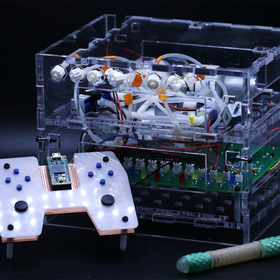
Robot could improve diagnosis, treatment of small intestine disorders
An innovative robotic device inspired by snake movement could someday help gastroenterologists diagnose and treat inflammatory bowel disease (IBD) and other disorders of the small intestine and remove small polyps while reducing trauma to the organ’s delicate tissues.

Artificial intelligence-enabled triage tools may reflect human biases
Artificial intelligence (AI)-driven tools used in emergency triage may be susceptible to the same clinical stigmas associated with human assessments, researchers at UT Southwestern Medical Center reported in a study published in npj Digital Medicine.
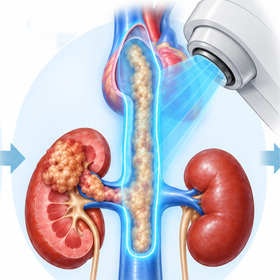
Targeted radiation shows promise for life-threatening kidney cancer complication
When Diane Gentry, a 71-year-old retiree from Watauga, Texas, was diagnosed with stage 4 kidney cancer in 2015, she learned the tumor had grown into her inferior vena cava, the body’s largest vein. This potentially life-threatening complication can require extensive surgery and carries a high risk of cancer recurrence.
O’Donnell Foundation marks nearly $400 million in support for UT Southwestern with final gift
The O’Donnell Foundation’s legacy of support for UT Southwestern Medical Center will reach nearly $400 million with a capstone gift of its remaining assets, completing more than half a century of philanthropy that has advanced biomedical discovery, medical education, and patient care.
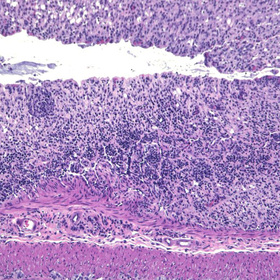
Protein puts brakes on intestinal inflammation, UTSW study finds
A preclinical study by researchers at UT Southwestern Medical Center has discovered how a protein called ZBTB44 helps prevent excessive immune activity that can cause inflammation in the colon, the main section of the large intestine.
CPRIT honors UTSW’s Argenbright with Texans Conquer Cancer Award
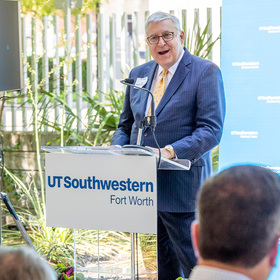
Keith Argenbright, M.D., Director of the Moncrief Cancer Institute at UT Southwestern Medical Center, received the 2026 Texans Conquer Cancer Award.
What happens when a key cancer defense fails?
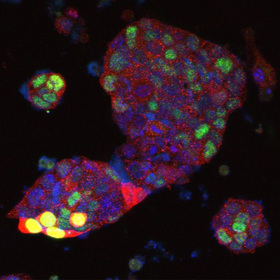
A tumor suppressor gene known as p53 is mutated in more than half of all cancers, but how it acts to prevent cancer formation is largely unknown.

UTSW Research: Heart failure, diet’s impact on aging, and MS drugs
Research published in Science Advances found that specific blood proteins may help explain how social and economic disadvantages increase the risk of heart failure.

New pediatric campus in Dallas reaches major construction milestone
Watching the new pediatric campus created by Children’s Health and UT Southwestern Medical Center rise in Dallas’ Southwestern Medical District holds special meaning for Cameron Strother.

UTSW spinoff receives $2.6 million CPRIT grant to develop novel cancer immunotherapy
MusiQ Bio, a biotech startup created to advance an anticancer technology developed at UT Southwestern Medical Center, has been awarded a $2.59 million grant from the Cancer Prevention and Research Institute of Texas (CPRIT).